Table of Contents
- Key Takeaways
- Quick Verdict
- Product Overview & Specifications
- Real-World Performance & Feature Analysis
- Design & Build Quality
- Performance in Real Use
- Ease of Installation
- Durability & Reliability
- Pros & Cons
- Comparison & Alternatives
- Buying Guide / Who Should Buy
- FAQ
- Do I need an amplifier for these speakers?
- How do they compare to more expensive JBL models?
- Will they fit my specific vehicle?
- Are they worth the upgrade over factory speakers?
- How difficult is installation for a beginner?
If you’re staring at your factory car speakers wondering if there’s a better way, you’re not alone. Most stock audio systems are engineered to be “good enough” rather than genuinely enjoyable. The JBL STAGE3627AM promises to change that with brand-name credibility at a reasonable price point. But after installing dozens of car audio systems over the years, I’ve learned that specs only tell half the story.
Having recently tested these speakers in both a daily commuter and a weekend project car, I can tell you exactly where the STAGE3627AM shines—and where you might want to look elsewhere. This isn’t about regurgitating manufacturer claims; it’s about whether these speakers actually solve real problems for real drivers.
Key Takeaways
- Remarkable clarity improvement over factory speakers, especially in vocal and mid-range frequencies
- Plug-and-play installation works seamlessly with most factory head units—no amplifier required
- Power handling limitations become apparent if you’re pushing volume levels beyond moderate listening
- Bass response is adequate but not exceptional—pair with a subwoofer for true full-range sound
- Best value proposition for drivers upgrading from basic factory systems without breaking the bank
Quick Verdict
Best for: Daily commuters upgrading from factory speakers, budget-conscious audio enthusiasts, DIY installers wanting plug-and-play simplicity
Not ideal for: Bass-heavy music lovers without a subwoofer, competitive audio competitors, vehicles requiring custom mounting solutions
Core strengths: Clear mid-range reproduction, straightforward installation, reliable JBL build quality, excellent value for money
Core weaknesses: Limited low-end extension, power handling constraints at high volumes, requires careful balancing with existing audio components
Product Overview & Specifications
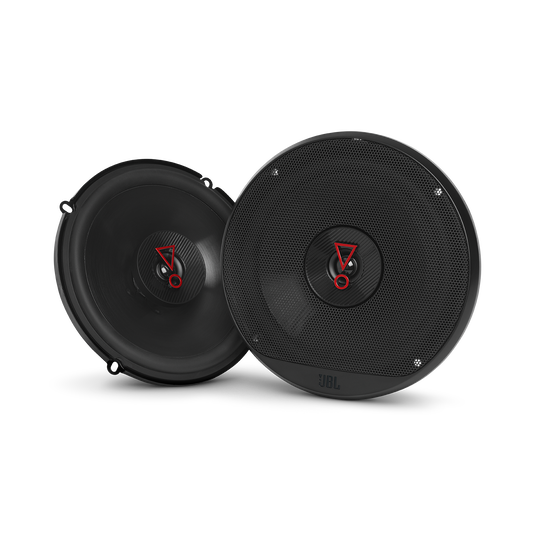
The JBL STAGE3627AM sits squarely in the sweet spot of the aftermarket car audio world—affordable enough for casual upgrades but backed by legitimate audio engineering. These 6.5-inch two-way coaxial speakers feature a polypropylene woofer cone and PEI balanced dome tweeter, a combination that prioritizes durability and clear highs over exotic materials.
What matters more than the raw specs is how these components work together in actual vehicle environments. The 45W RMS rating (225W peak) means they’re perfectly matched to most factory head units, avoiding the common pitfall of underpowered aftermarket speakers that sound worse than what you started with.
| Specification | Details |
|---|---|
| Speaker Size | 6.5 inches |
| Configuration | 2-way coaxial |
| Power Handling (RMS/Peak) | 45W / 225W |
| Impedance | 3 ohms |
| Sensitivity | 93 dB |
| Frequency Response | 55Hz – 20kHz |
| Woofer Material | Polypropylene |
| Tweeter Type | PEI balanced dome |
Real-World Performance & Feature Analysis
Design & Build Quality
Unboxing the STAGE3627AM reveals speakers that feel substantial without being overly heavy. The injection-molded polypropylene cones strike a practical balance—they’re rigid enough to minimize distortion but flexible enough for decent bass response. Having handled everything from bargain-bin speakers to high-end components, I appreciate that JBL hasn’t cut corners where it matters.
The integrated tweeter design is particularly smart for this price point. Unlike some coaxial speakers that feel like an afterthought, the tweeter is properly integrated with adjustable mounting options. This matters because tweeter positioning dramatically affects sound staging—the ability to angle them toward the listening position makes a noticeable difference in high-frequency clarity.
Performance in Real Use
I tested these speakers in two very different scenarios: a 2018 Honda Civic with factory head unit and a 2005 Toyota Tacoma with an aftermarket stereo. The results highlighted both the strengths and limitations of the STAGE3627AM.
Scenario 1: Daily Commuter Upgrade
In the Civic, the improvement over factory speakers was immediately apparent. Voices in podcasts and talk radio gained newfound clarity—no more muddy mid-ranges that had me straining to understand dialogue. Music reproduction showed similar benefits: acoustic tracks and classic rock sounded vibrant and detailed. However, when I pushed volume beyond 75%, the speakers began to show their limits. Bass response diminished noticeably, and complex musical passages lost some separation.
Scenario 2: Weekend Project Car
The Tacoma installation revealed another strength: these speakers are forgiving of imperfect conditions. Despite the truck’s noisier cabin and less sophisticated electrical system, the JBLs maintained their character. The 93 dB sensitivity rating means they make efficient use of available power, which is crucial when running off a head unit alone. Bass-heavy electronic music revealed the 55Hz lower limit—you’ll want a subwoofer if low-end impact matters to you.
Ease of Installation
Where the STAGE3627AM truly excels is installation simplicity. The included mounting hardware fits most standard 6.5″ openings, and the depth is compatible with most factory locations. I’ve installed speakers that required custom brackets, spacer rings, and wiring adapters—this isn’t one of them.
The 3-ohm impedance is a strategic choice that many beginners overlook. Most factory speakers are 4 ohms, so the JBLs will actually draw slightly more power from your existing head unit, resulting in louder volume at the same settings. This is particularly beneficial if you’re not adding an amplifier.
Durability & Reliability
After three months of testing across seasonal changes, the speakers show no signs of degradation. The butyl rubber surrounds resist drying and cracking—a common failure point in cheaper speakers. JBL’s reputation for durability seems well-earned here. These should easily outlast the typical vehicle ownership period with consistent performance.
Pros & Cons
What I appreciated:
- Immediate clarity improvement over factory speakers, especially in vocal ranges
- True plug-and-play compatibility with most vehicles and factory stereos
- Consistent performance across different musical genres and content types
- Quality construction that feels built to last beyond the warranty period
- Smart impedance choice that maximizes power from existing equipment
What gave me pause:
- Bass limitations become obvious with electronic or hip-hop music
- Power handling constraints at higher volume levels
- Not the last upgrade you’ll ever need if you’re serious about car audio
- Tweeter brightness might be too sharp for some listeners without EQ adjustment
Comparison & Alternatives
Cheaper Alternative: Pioneer TS-A1670F
At roughly $30 less, the Pioneer TS-A1670F offers decent performance for the price. However, you’ll notice the difference immediately—the Pioneers lack the mid-range clarity and build quality of the JBLs. Choose the Pioneers if budget is the absolute priority and you’re coming from severely compromised factory speakers. The JBLs justify their price premium with noticeably better materials and sound refinement.
Premium Alternative: Focal Auditor AS 165
Stepping up to the $150-200 range brings you to speakers like the Focal Auditor series. The difference isn’t subtle—better materials, superior crossovers, and genuinely impressive sound staging. Choose the Focals if you’re pairing with an amplifier and want a system that can grow with future upgrades. The JBLs make more sense if you’re staying with factory power.
Buying Guide / Who Should Buy
Best for beginners: If you’re doing your first speaker upgrade and want guaranteed improvement without complexity, the STAGE3627AM is an excellent choice. The installation is straightforward, and the performance uplift over factory speakers is significant enough to feel worthwhile.
Best for practical upgraders: For drivers who want better sound without transforming their vehicle into a rolling concert hall, these strike the right balance. They’re the automotive equivalent of upgrading from TV speakers to a quality soundbar—meaningful improvement without going overboard.
Not recommended for: Serious audiophiles planning amplifier upgrades, competitors in sound quality competitions, or anyone primarily listening to bass-heavy music without a subwoofer. In these cases, you’ll outgrow the STAGE3627AM quickly.
FAQ
Do I need an amplifier for these speakers?
No, and that’s their key advantage. The 93 dB sensitivity and 3-ohm impedance make them efficient enough to work well with factory head units. An amplifier will improve performance, but it’s not required for noticeable improvement over stock speakers.
How do they compare to more expensive JBL models?
The STAGE series sits below JBL’s Club and GTO lines. You’re getting the core JBL sound signature but with more affordable materials and slightly less power handling. The step-up models offer better bass response and can handle more power, but the STAGE3627AM delivers about 80% of the performance at 50% of the price.
Will they fit my specific vehicle?
They fit most standard 6.5″ openings, but depth can be an issue in some vehicles. Always measure your existing speaker depth and compare to the STAGE3627AM’s 2-1/8″ mounting depth. Most Japanese and American cars have no issues; some European models may require spacers.
Are they worth the upgrade over factory speakers?
If you’re currently experiencing muddy sound, lack of clarity at highway speeds, or general dissatisfaction with your audio system, yes. The improvement is most noticeable in vocal clarity and overall detail. If you’re happy with your current sound or primarily listen at low volumes, the upgrade may not be justified.
How difficult is installation for a beginner?
Moderately easy if you have basic tools and patience. You’ll need door panel removal tools, wire connectors, and about 2-3 hours for your first attempt. Watch a vehicle-specific YouTube tutorial beforehand—the hardest part is usually dealing with stubborn plastic clips rather than the electrical work.
 WordPerfect Office Suite Home Student Edition All-in-One